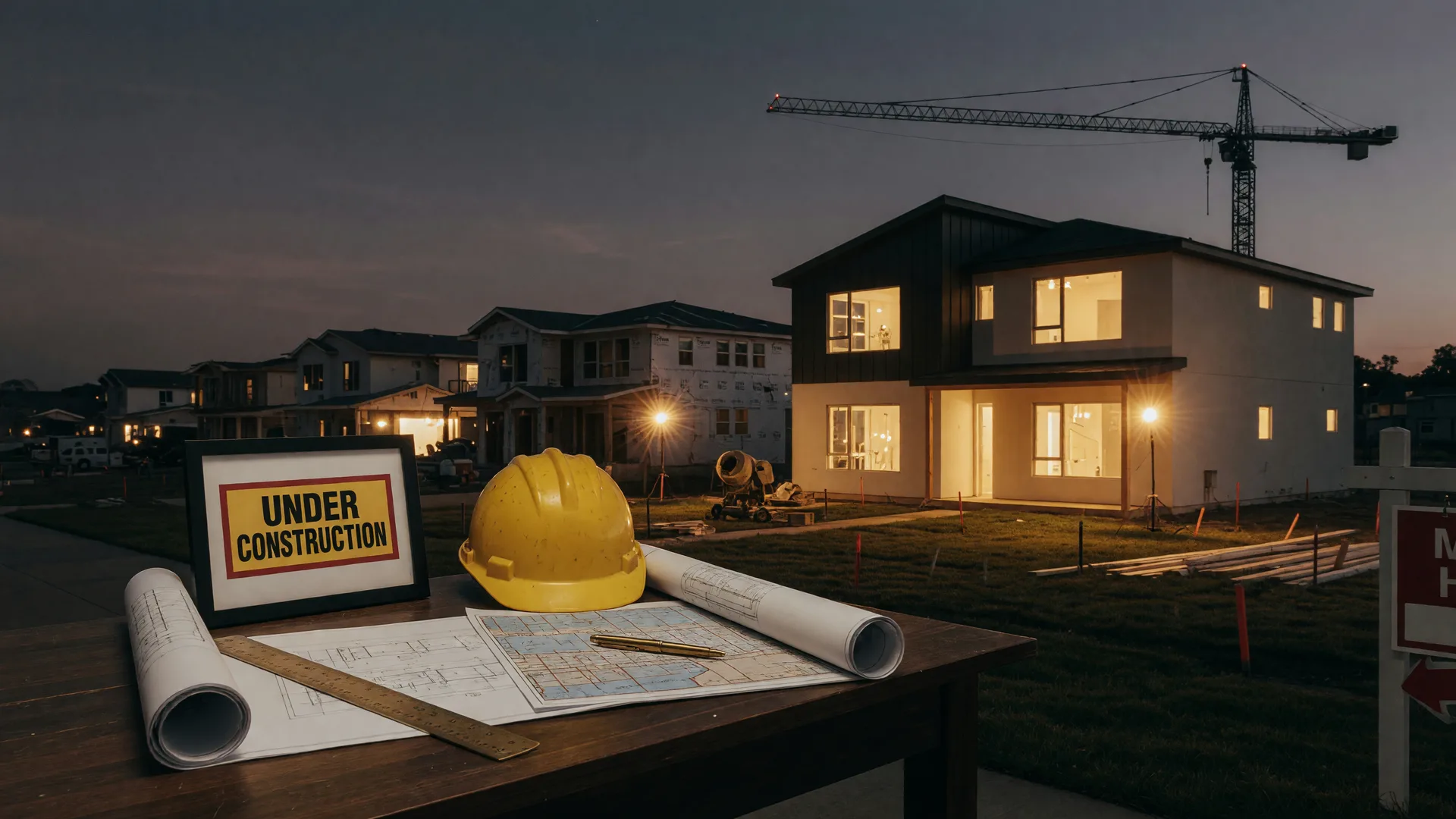
It's Thursday, October 22, and I already know what's showing up in agents' search bars this week: "Will pending sales stay this low?" Sometimes it comes out as "Should I work with builders in 2026?" Sometimes it's "Is new construction worth it for buyers right now?" The words change, the ache does not. Agents watched pending sales crater to a record low, saw housing starts fall to a post-COVID low, and are quietly asking where their next transaction comes from. This article is the answer: this fall's most underused growth channel is the new construction market, and the builders are more motivated than they have been in years.
Here is the honest truth: when the resale market freezes, the demand does not disappear, it moves to the builders. NAHB's confidence index fell to 29 in October, its lowest since June 2012, with a record 43% of builders cutting prices and the average price cut at 6% for a seventh straight month. New construction is about 16% of home purchases, its largest share since the mid-2000s per NAR's Profile of Home Buyers and Sellers, and newly built homes make up roughly 27% of the single-family homes listed for sale. This post walks through this week's real numbers and the five moves that grow your real estate business in the new construction market, whether you are a solo agent or leading a team.
The October data that changed the conversation
Start with what actually happened, because most agents are operating on last week's panic. On October 19, the NAHB and Wells Fargo Housing Market Index fell 3 points to 29, the lowest reading since June 2012. The survey has one number that matters more than the headline: a record 43% of builders cut prices in October, and the average price reduction has held at 6% for a seventh straight month. Builders' six-month sales expectations slid to 32, the lowest since November 2022. The people who build homes for a living are telling you in the clearest language they have: they are motivated to move inventory.
The next morning, October 20, the Census Bureau reported September housing starts fell 5.2% to a 1.221 million seasonally adjusted annual pace, the lowest since the pandemic low, with single-family starts down 4.6% and single-family permits down 4.0%. And on the same day, NAR reported pending home sales plunged 7.3% in September to an index reading of 66.0, the lowest since the series began in 2001, down 11.3% year over year. Pending sales are the contracts being signed today. That number says the resale pipeline is as cold as it has ever been measured.
What the numbers mean: builders are motivated, and buyers are still looking
Read those three numbers together and you get one story: the resale signing pipeline is frozen, and the people with the most to sell are finally pricing to move. When a record share of builders cuts prices while confidence sits at a 14-year low, you are looking at a motivated seller with standing inventory and a sales office that wants deals. That is not a market problem. That is an opportunity with a phone number.
Now add the mortgage side. The MBA's weekly survey had the average 30-year contract rate ease to 7.41%, the first drop in two months, yet purchase applications still fell 7% for the week and 18% year over year. And Fannie Mae's October outlook raised its 2027 30-year mortgage rate forecast to 7.5%, up from 6.7%. Translation: rates stay high for a while, existing owners stay locked into the homes they have, and new builds keep their oversized share of what actually sells. The buyer traffic is not gone. It is parked at the model home.
Why new construction is your demand story this fall
Here is the market share nobody is talking about. New construction made up about 16% of home purchases in 2024, its largest share since the mid-2000s, per Harvard's Joint Center for Housing Studies, and Redfin's analysis of Census and NAR data put newly built homes at roughly 27% of the single-family homes listed for sale. When resale inventory is full of stale listings and new builds are a quarter of the supply with motivated pricing behind them, the model home is where the buyer traffic is.
The buyer who used to buy a resale now has to compare against the new build with the incentive package. If you cannot open that conversation, you are letting the highest-traffic showroom in your market walk past you every single week. This is the part most agents get wrong: they treat new construction like a competitor, not a channel. Your job is not to fight the builder. Your job is to walk in with the buyer, register the relationship, and turn the builder's motivation into your commission. That is a channel, and channels are built with systems.
The new construction playbook: five moves to grow your real estate business
Here is exactly how to build this channel. This is the same playbook I coach inside my organization, and it works because it is concrete, not inspirational:
Move one: know the real inventory. Walk every new community in your market. Get the intel the portals cannot give you: base price versus lot premium, what is sitting on the site, what incentives the sales office is actually quoting, and how long homes are taking to move. Build a one-page file on each community and update it quarterly. This is due diligence your competition is not doing, and it turns you into the agent who shows up with a map instead of a guess.
Move two: register your buyers on the first visit. This is the rule that decides whether you get paid in this channel. Builders generally only pay a cooperating commission when the buyer's agent is registered on the buyer's first visit to the model home. If you hand a buyer a builder's card and they tour without you, the commission is gone, and it is the biggest, quietest money-loser in the business. Make registration a checklist item before you ever drive into a community, and it stops being a trap and starts being a system.
Move three: turn the rate objection into builder math. The average builder price cut is 6%, and builders are layering on incentives and financing help to move standing inventory. That changes the conversation. When the builder can contribute a rate buydown, the payment math shifts, and buyers buy payments, not rates. You already know the rate conversation system from the resale side, now apply it to a seller who can actually do something about the payment. That is the difference between a rate objection that kills a deal and one that closes it.
Move four: use the builder file to win listing appointments. This is the move most agents miss. Bring the new construction data to every listing appointment: here is what the builder down the street is doing, the price cut, the incentive, the buydown. Your seller is not competing with the house across the street, they are competing with the new build that comes with a payment advantage. When you show up with the builder's actual numbers, you win the pricing conversation with data instead of opinion. This is the same muscle from our inventory-heavy listing playbook, pointed at the strongest competitor in your market: the motivated builder.
Move five: make it a system, then build the team. New construction is a repeatable channel, not a special project. It runs on a quarterly walk-through calendar, a buyer registration checklist, a follow-up cadence, and a CRM tag for every community and every builder lead. Real estate systems are what let you increase real estate production while the resale market freezes, because a system does not need the market to be nice. And once the channel is full, this is where you scale your real estate team: a buyer specialist owns the model-home circuit, an ISA owns the follow-up, and the leader runs the numbers. Team leader coaching is about installing the system and holding people to it, not about doing every tour yourself.

Why your model decides how much of this you keep
New construction is higher-volume, thinner-margin work, which means the model you run on decides how much of it you keep. The eXp model, cloud-based, office-free, with no five-level cap, is a superior growth environment for exactly this kind of business: your overhead stays low, your compensation does not get capped as you scale your real estate team, and revenue share and equity mean the production you build keeps paying. When you are doing more tours and more transactions in a thinner-margin channel, cost structure is survival. The agents I've watched grow their real estate business over 23 years never once grew by renting a bigger office to serve a busier channel.
"Builders are cutting prices at a record pace and buyers are still looking. The market did not freeze, it relocated. The agents who meet it at the model home win the fall. Making real estate fun again starts with following the demand, not the headlines."
Coach Randy Byrd
What this means for your 2027
Now look forward, because the leading indicators are already written. Housing starts at a post-COVID low means thinner new-home supply ahead. Fannie Mae's forecast of a 7.5% 30-year rate in 2027 means the lock-in effect holds. Both point the same direction: new construction keeps an outsized share of the market through next year. The agents who build the builder channel now, this quarter, own the market share when supply tightens and rates finally turn. That is the whole game: build the demand engine while everyone else waits for the weather.
Strong years are built in Q4, not in January. Reverse-engineer your 2027 goal into transactions, appointments, and conversations, then add one new channel to the mix: new construction. If you have read this far, you are the kind of agent who does not wait for the calendar to flip. If you're ready to build a business that grows in any market, book a free 10-minute call with me and let's look at your numbers, your systems, and your new construction plan before the year ends.
The new construction checklist, printed and taped to your monitor
If you want it shorter than the five moves, here is the channel on one card: Walk the communities. Build a one-page file on every new community in your market and update it quarterly. Register first, tour second. The buyer's agent is registered on the first visit, every time, no exceptions. Bring the builder math. Price cuts, incentives, buydowns, translated into a monthly payment. Carry the file to every listing appointment. Your seller competes with the builder down the street, so show them the builder's numbers. Run it on a system. Quarterly walks, a follow-up cadence, a CRM tag, and a weekly number.
Do those five things for the rest of this quarter and the new construction channel becomes your most predictable source of demand while the resale market stays frozen. Builders are telling you they want deals. The only question is whether you show up at the model home with the systems to close them.
Sources: NAHB, "Builder Sentiment Falls on Rising Rates", U.S. Census Bureau, New Residential Construction, September 2026, NAR Pending Home Sales Index, CNBC, "Mortgage Rates Drop for the First Time in 2 Months, but Demand Still Falls", Redfin, "27% of For-Sale Homes Are Newly Built", and Harvard Joint Center for Housing Studies, State of the Nation's Housing 2025.
Talk soon, Byrd.